Munich Isarphilharmonie – Client visit

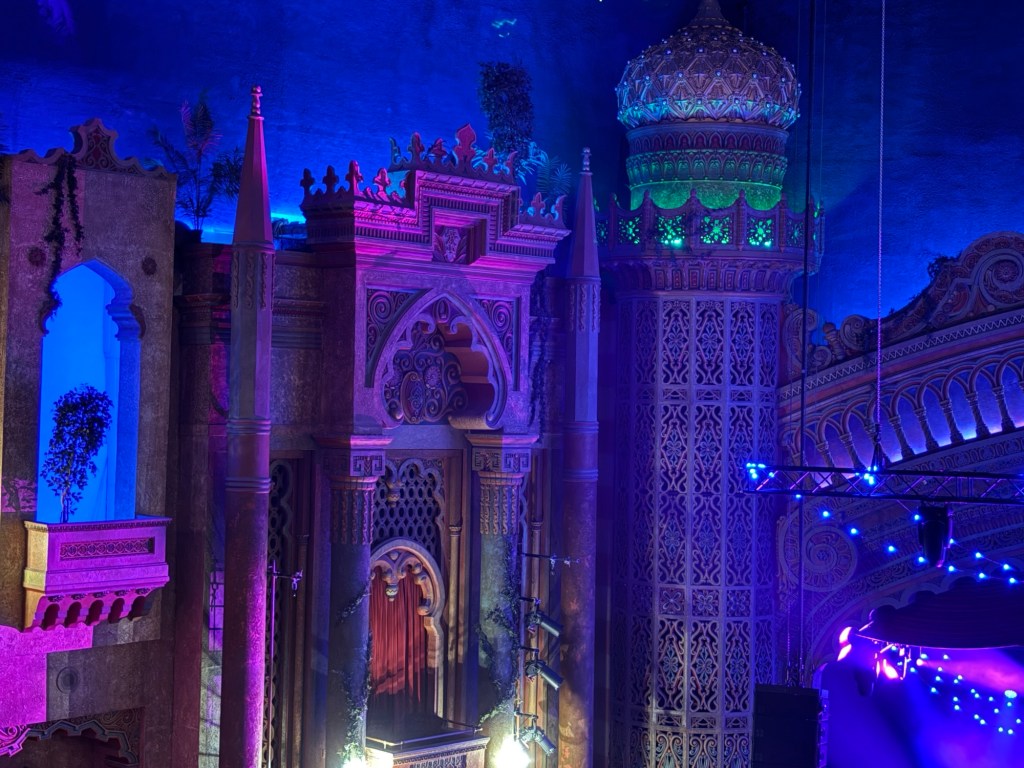
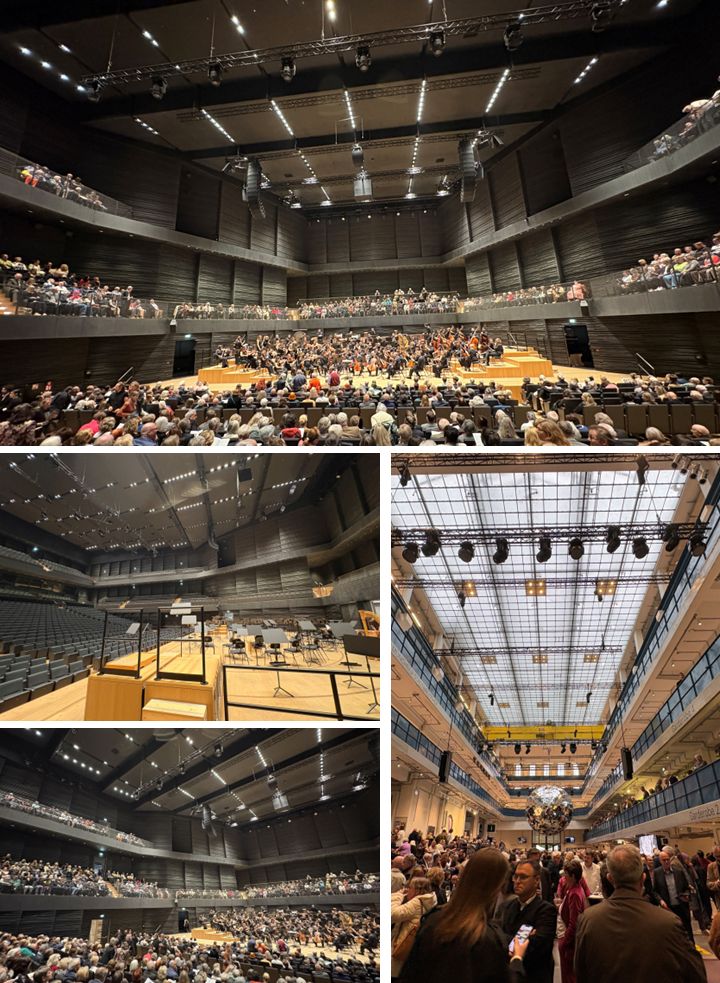
The best part about the Isarphilharmonie at Gasteig HP8 could have been the foyer, until Utopia Orchestra owned it.

This foyer is exciting, industrial, and perfectly sized. Built as a temporary 2,000-seat concert hall while the original hall is being reinvented, the venue makes use of an old factory building for the front-of-house: ticketing, café, cloakrooms, toilets, circulation, and probably a few spaces I never found.

Once the bell rings, it is time to percolate through the narrower entry towards the new-build concert hall and its tighter circulation spaces. Locals may know the routes to avoid bottlenecking, but there are enough newcomers (me) to jam the main access.

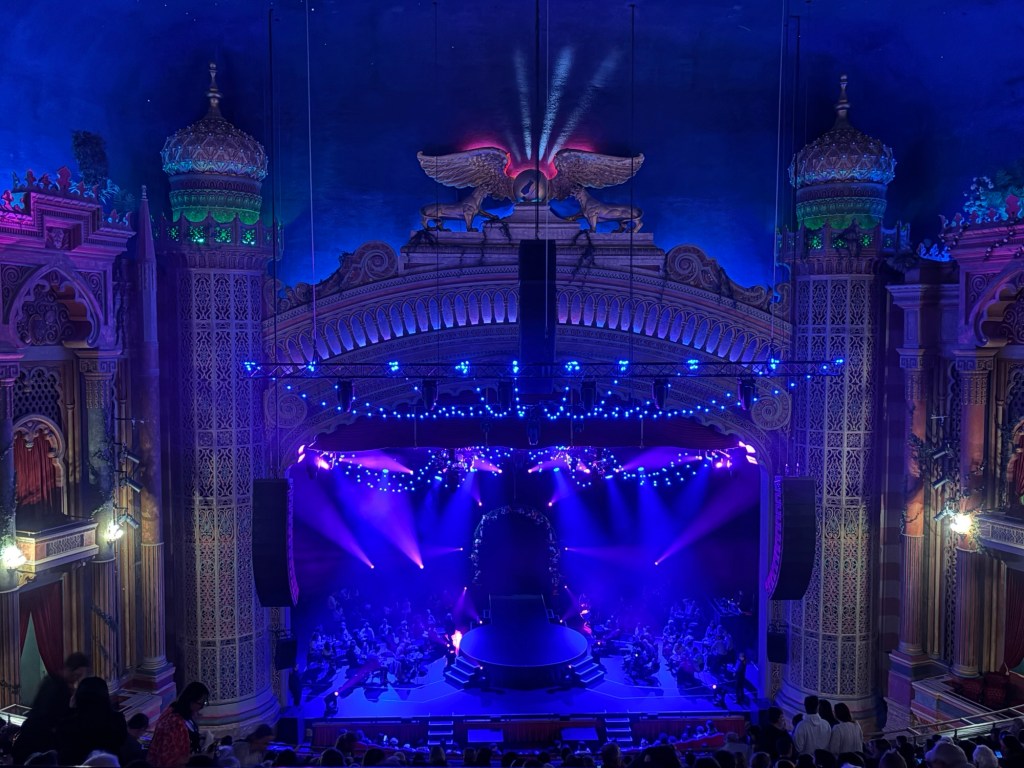
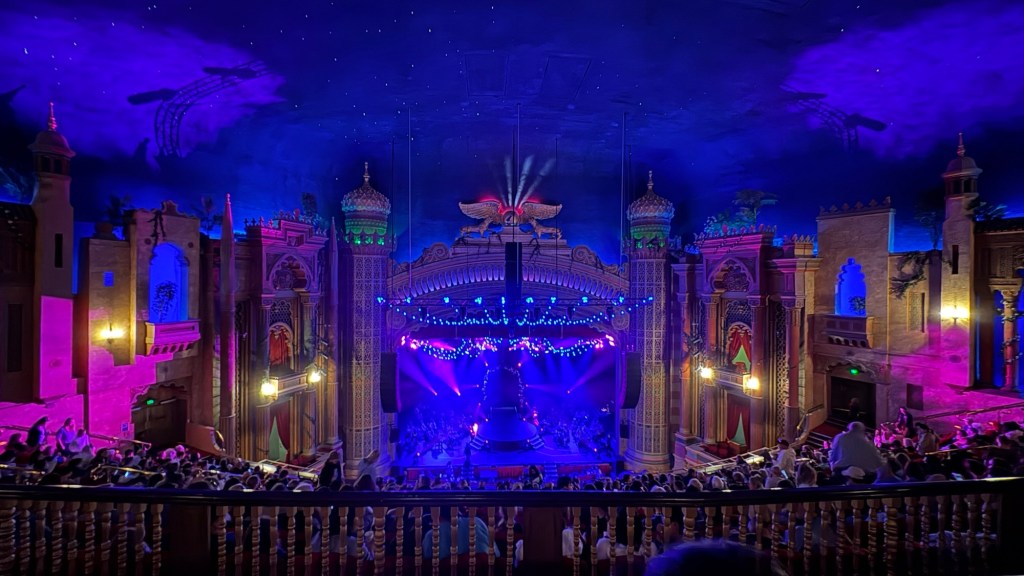
The concert hall itself is black, continuing the industrial-chic language, with steel wire mesh as balcony fronts. Suitable choices for a temporary hall. The seats and aisles are comfortable, but one cannot quite shake the feeling of being in an ad-hoc space.

The bare walls above the stage may contribute to that impression, but the main giveaway is the sawtooth-shaped ceiling. This curious design decision seems to reduce overhead reflections noticeably, from my row 18 seat. The sound envelopment lacked one dimension: clear sound coming from the sides, some from the rear, but not much from above. A clear contrast with KKL Luzern.

I also found that the hall did not favour blend in the string sections. Perhaps a result of the sawtooth ceiling and a largely horizontal diffusion pattern covering the entire room, including the side walls of the stage. The effect was a very analytical image of the orchestra, with individual instruments presented individually, too much to my taste.

Thankfully, Maestro Teodor Currentzis and his extraordinary Utopia Orchestra brought a programme with real punch, and an energy that made us forget the black walls, the two-dimensional sound, and the wire mesh.

Vilde Frang was stunning in Berg’s Violin Concerto, Dem Andenken eines Engels. Even more impressive, she returned as first violinist for Mahler’s First Symphony, Titan.

This time, almost all musicians, except the cellists, were standing, moving with the music, and physically magnifying each phrase. It was contagious and exhilarating, but it also seemed to improve the blend of the orchestral sound. Perhaps the movement of the instruments introduced just enough “fuzz” into the otherwise analytical reflection patterns. The orchestra sounded phenomenal, intimate, celebratory, inviting, passionate.

We were all carried away to a standing finale, the audience charged with as much adrenaline as the musicians. Maestro Currentzis and the Utopia Orchestra blew the sawtooth roof off the hall. I absolutely loved it.

With that Orchestra, the hall becomes great value for a temporary venue.

Luckily, there was still enough left in the tank for a backstage chat and a drink with musicians, back in that great foyer, where the bar closed far too soon.

KKL Luzern – Client visit

If KKL Luzern is nearly 30 years old, it doesn’t show.
(I was there with a client a couple of weeks ago.)

Designed by Jean Nouvel, the building still feels precise, theatrical and loved.
Well, perhaps it does show a little age in the backstage areas, where I met the brass orchestra preparing for their evening concert. But there, the wear and tear is evidence of the venue’s success and busy programme.

The foyer, with its interior rivers, is impressively open. It may create some challenges for simultaneous events, but visually it is wonderful and connected to the water front.

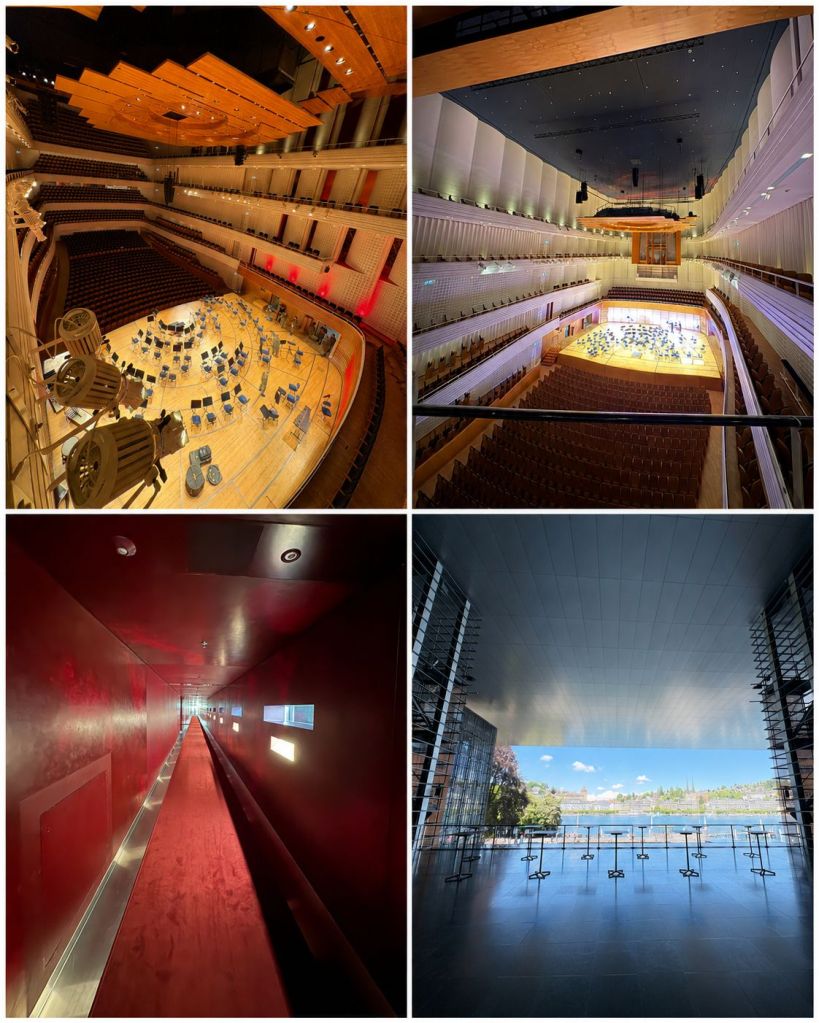
The passerelles leading to the main hall balconies, and the long, almost mystical red corridors, reminded me of the very long soundlocks at the Philharmonie de Paris. A fantastic architectural trick to maintain the suspense and delaying the gratification of finally entering the hall.

The hall itself speaks of verticality and, from the fourth balcony, probably of vertigo. I was lucky enough to have tickets in the stalls and 1st balcony. From there, the hall looks grand, ceremonial.

The doors to the reverberation chambers were open, revealing mysterious red painted spaces that prolong the decay of sound in the hall. The added reverberation clearly sounds as coming from above, just above (but I understand that this can change using the lower level doors more). Definitely audible both in the stalls and on stage.

The tone is warm, as I expected, given the heavy materials (concrete doors!) and the extensive shallow diffusion throughout the hall. The room has a mellow voice while retaining enough clarity and presence.

What kept me alert during the concert? The hard seat!
And also the ten snare drums perched on the edge of the stage, playing at full force and at a deafening pace. At that point, the hall certainly woke up, with the overstage canopy contributing some noticeably unusual reflections from that (unusual) stage position.

Perhaps the most spectacular part of KKL, for me, was the roof: framing the waterfront and the mountains, with a terrace overlooking the lake. It sets the tone for a very high-quality evening before the music even begins.

After 30 years, the building still looks incredibly tidy and cared for.

(There will be a follow up post on the fascinating concert I attended the next morning.)

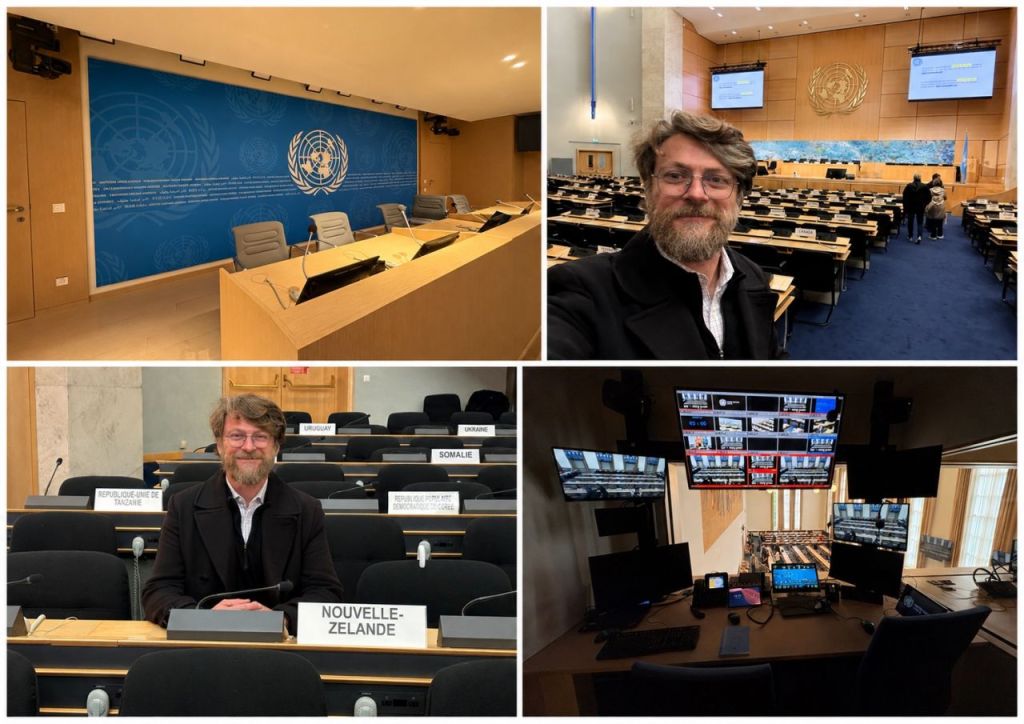
UN Headquarters Geneva

Once in a while, one gets lucky.

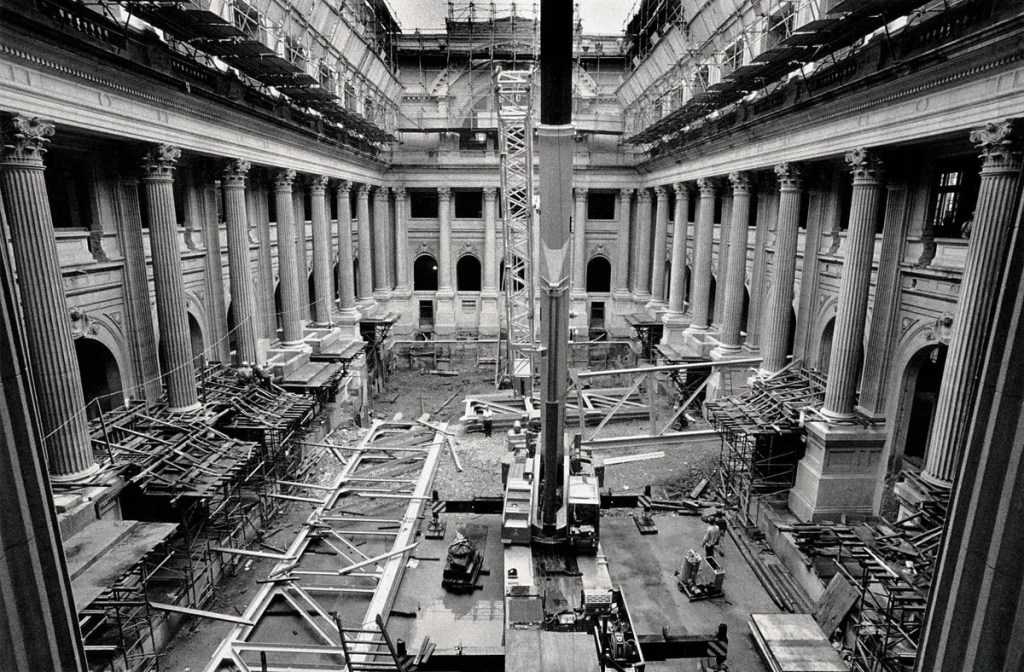
The United Nations 🇺🇳 headquarters in Geneva is undergoing a major redevelopment of its campus, including many historically listed buildings and spaces.

Not only the Assembly Hall we regularly see on the news, but also the many rooms used for conferences, meetings, gatherings, and the support spaces behind them.

In diplomacy, bad acoustics is not an option. Poor intelligibility, excessive reverberation, intrusive noise, lack of speech privacy, or latency between the room and interpreters’ booths can all have serious consequences.

Acoustically, the work is about clarity, discretion, comfort, and reliability: reverberation control, noise control, speech privacy, and the performance of the audio systems.

It is a majestic place, where history is made every day.

A few photos from an earlier ARD site inspection with the UN engineering team.

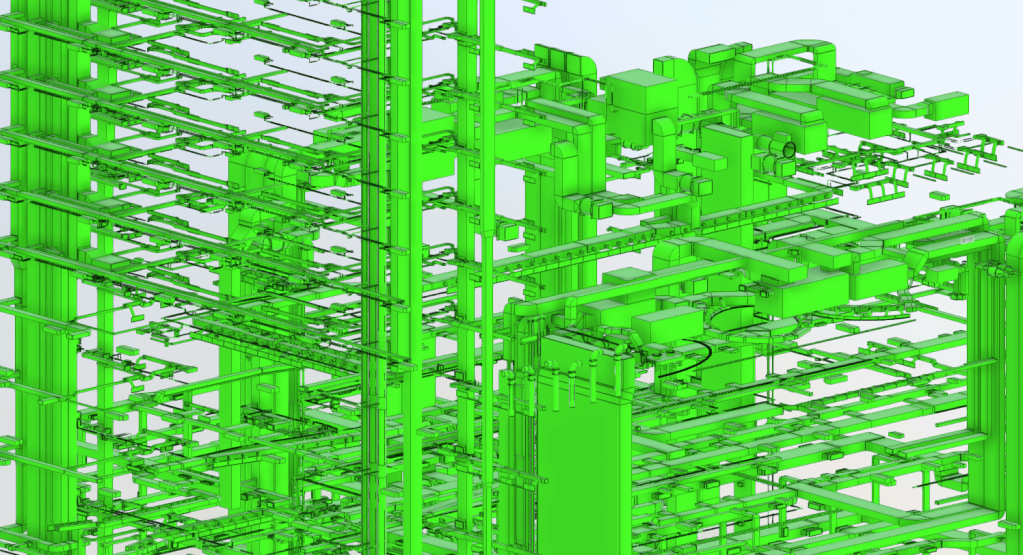
Spaghettis used to be scary. Not anymore.

A few years ago, 3D models of HVAC systems were almost unheard of. Two-dimensional drawings were required (plans and sections) leaving the acoustic consultant with a real puzzle to decipher… often at the very last minute, once the HVAC design was completed, documented, and transmitted.

BIM has changed the game. Even when the design is still evolving, it is now much easier to identify noise sources in the system, transmission paths, troublesome branches, and unfortunate balancing dampers. The whole system is there to be read as one builds the calculation. One plug-in later, and the entire route is mapped out, velocities checked, and ready for assessment.

There are still thousands of challenges with BIM models. One of them is the affordability of software packages. Another is the cost of training. We have heard these concerns for years, yet little has changed. Large projects still rely on the same platforms, and design teams are expected to be equipped, licensed, and proficient with the right package, the correct version, and compatible workflows.

At ARD, we invested because our projects and our clients expected it. And it has paid off: hours saved, earlier insights, and more timely advice when something “not quite right” appears between two model versions. We are far more familiar with the systems as a result, and this shows in the advice we give.

Complex systems still take time to process, and the quality of the output always depends on the quality of the input, not just the 3D model, but also the noise data behind it. Yet we can honestly say that the task has become far easier, and far clearer, than it ever was before.

No, spaghettis are not scary anymore.

Is “poor acoustics” part of the building heritage?

I often argue that it is. Acoustics are woven into the record, the significance, and the lived experience of historical buildings. I like the idea that the notes played long ago don’t completely vanish, that the voice of a space lingers, evolved over time.

But what happens when the brief is to rebuild a long-lost concert hall, exactly as per the surviving drawings? And what if the acoustics of that historic design fall short of clients’ and community’s modern expectations?

That’s exactly when the acoustician needs to be brought in early. Before the diggers, before the builders, before the politics.

Sightline assessment

As pointed out in the comments to my previous post, the decision on whether a view is restricted in a performing arts venue often rests with the theatre consultant; a specialist tasked with making that final judgment.

This kind of expertise comes from attending many performances in a wide range of venues. It’s about recognising spatial relationships and understanding from these experiences, whether other people are likely to be annoyed every time, occasionally, or not at all.

Which makes me wonder:
If the responsibility is put on someone(s) who rarely (or never) attends live performances, how can they be expected to know when a sightline might be a problem?

Harry Clark Prize

The Harry Clark Prize for room acoustics is named after the acoustician who, in 1919, was engaged by the Chairman of the House and Furnishing Committee of the House of Representatives in Wellington, New Zealand.

His report on the reasons why the Chamber in the new parliament building had poor acoustics is a remarkable 8-page document full of a comments and observations that are simply true. Most of these truths would be confirmed decades later by experiment. A long way ahead of his time.

My paper Recent development in Visualisations for Acoustics was awarded the inaugural paper. In the paper, I demonstrate how visualisation does not have to be static, engineered and complex. That in fact, it can speak for itself to a non-technical audience, while providing a mean to check that a concert hall design serves all sections of the orchestra. A win-win.

In the presentation, I simply emphasized the need to rethink our undecipherable reports filled with complex graphics, and instead, to reimagine how we visualize sound in performance spaces. Here is an example, with sound:

Visualizing sound reflections (Part 2)

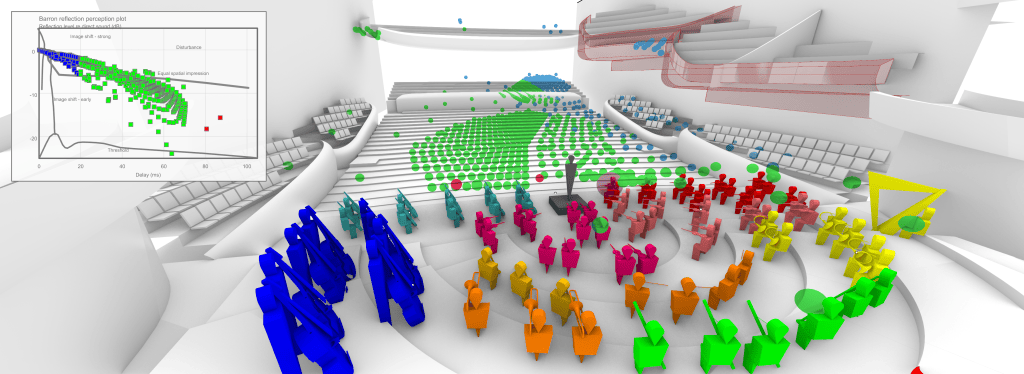
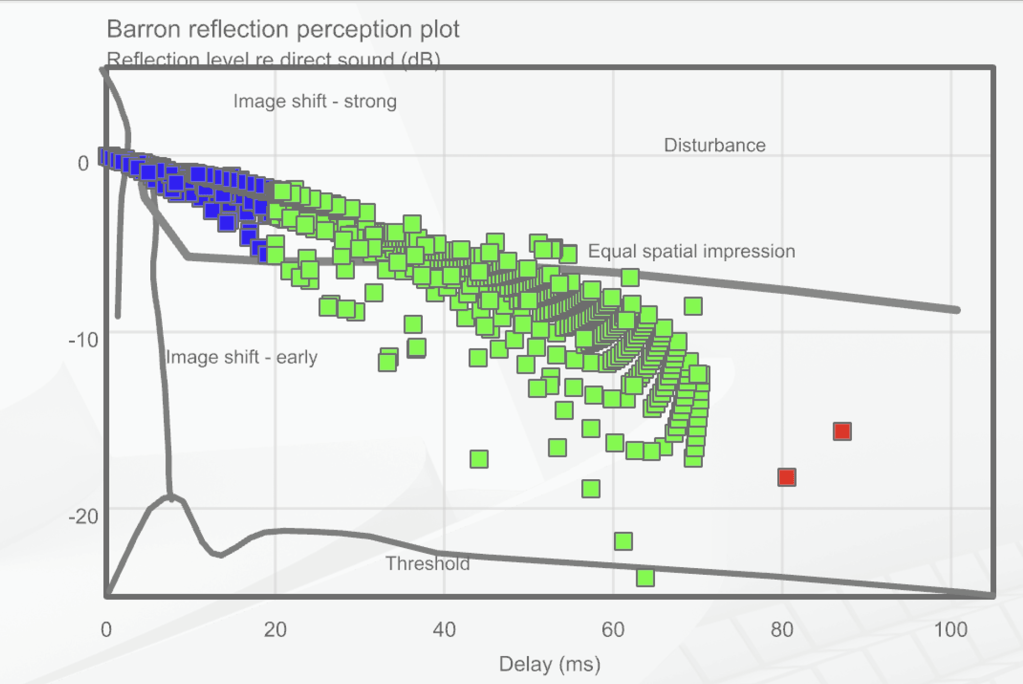
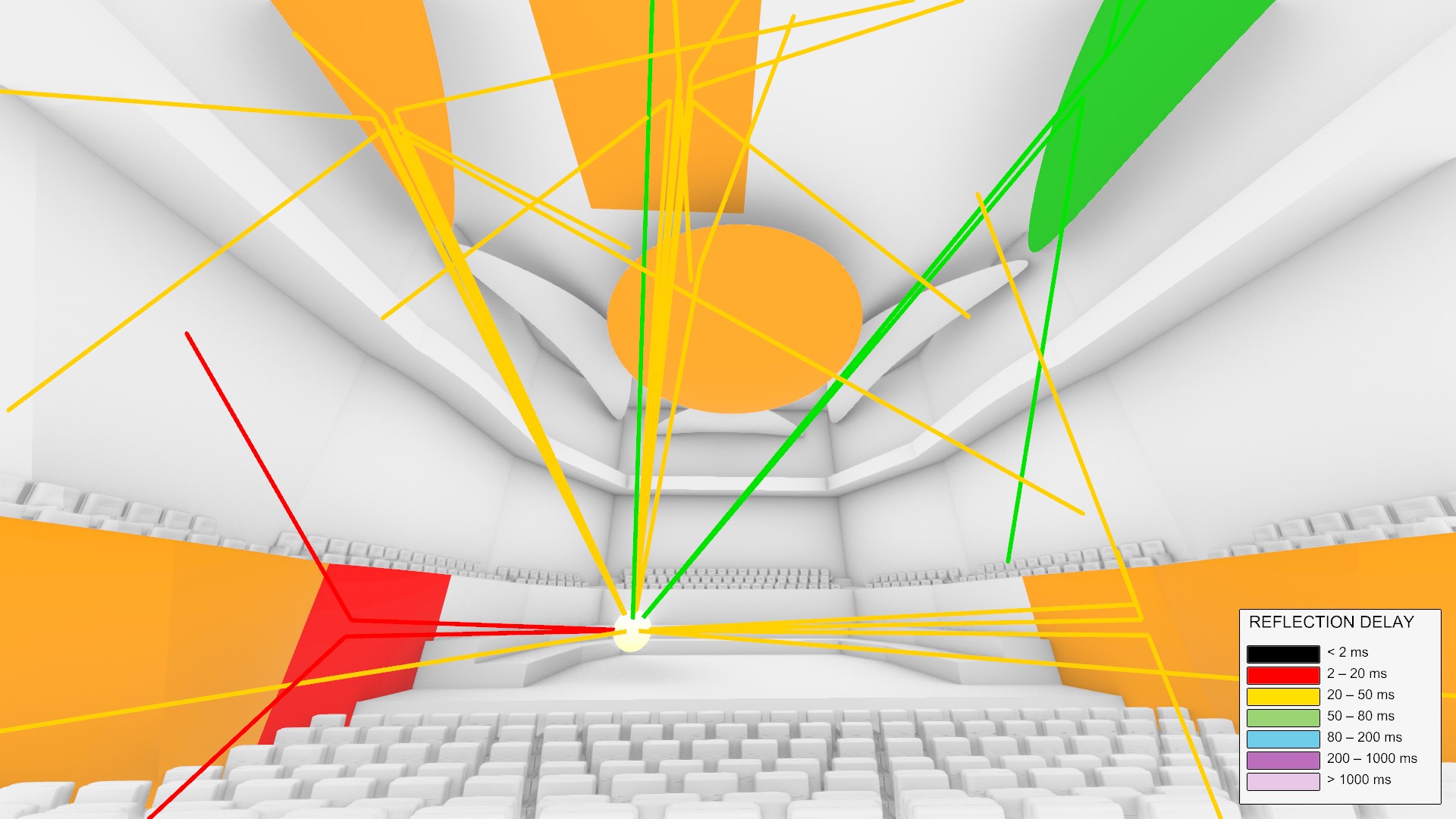
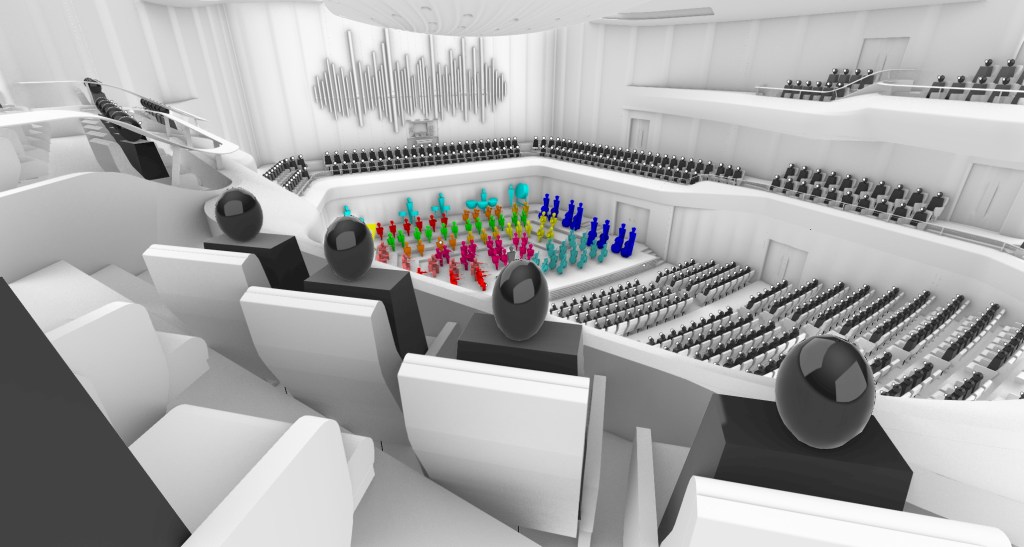
Following up on the popular topic of visualizing sound reflections (see previous post), we want to highlight the benefit of developing systematic tools to illustrates, qualitatively, the acoustical merits of a design (or a design change).

Designs that do not support all orchestral sections sufficiently often result in an imbalance of the orchestral sound or noticeable variations depending on where the performer stands. Indeed, most simulation packages start with the source definition in a 3-dimensional space from which all calculations start, after all, the hall is an extension of the musical instrument.

We suggest here that the opposite must also be achieved. The whole stage imaging requires the analysis to be carried out from the listener’s point of view as well. It is not always enough to design assuming one source position at the time, especially the design relies on carefully developed reflection sequences.

Considering the orchestral balance, as heard by the audience, is a respectable goal and many would agree with this but few report or quantify it. It is assumed to be part of the design elements left to “experience” and “know-how”. Acoustic briefs could include requirements such as “The acoustic design of the hall should demonstrate provisions for all areas of the stage and sections in the orchestra”. One of the reasons might be that it is highly related to the artistic direction of the orchestra, the aspirations for the venues and preferences of a conductor, of the moment. Another reason is simply that there is no simple way to check it.

Until this:

And yet, there is more to come!
Talk soon!

Visualizing sound reflections

In 2013 at ISRA conference in Toronto, I presented work on parametric design done with Zaha Hadid Architects in Hong Kong for the Changsha Mexihu Opera House. And some acousticians in the audience asked me why I was giving so much power away to the architect! I was shocked by this question (and didn’t have a great response on the spot). I never thought like that about architects and have always wanted to invite them into the acoustic design (and still do). The more engaged we are with one another, the better off the acoustic and architectural outcome for the project. Sadly, not everyone things like that.

There is more to acoustic design than “trust me”. Just like there is more to architectural design than “I am your client, do what I say”. Collaboration does not simply mean that the architect and/or interior designer need to listen to us and do what we say. Collaboration is a two way effort, it is not owed nor to be wrestled. And it requires efforts and good communication.

Yet, many acousticians do struggle with translating complex concepts into tangible and self-explanatory pieces. We know humans do better with visual cues so why are we sticking to numbers, ratios and logarithmic scales when we talk to designers and decision makers?

Probably because it is easier. We all wrote a too long report at least once and were all surprised that no one read it. Realizing that, I started in 2008 working directly in the visual environment that architects use. I started doing my ray-tracing in Rhinoceros 3D software where I could modify a 3D geometry, optimize it, check I was actually not going off-track architecturally and send back the modified model to the architect. And guess what, it worked and I was getting far more information across and more efficient collaboration.

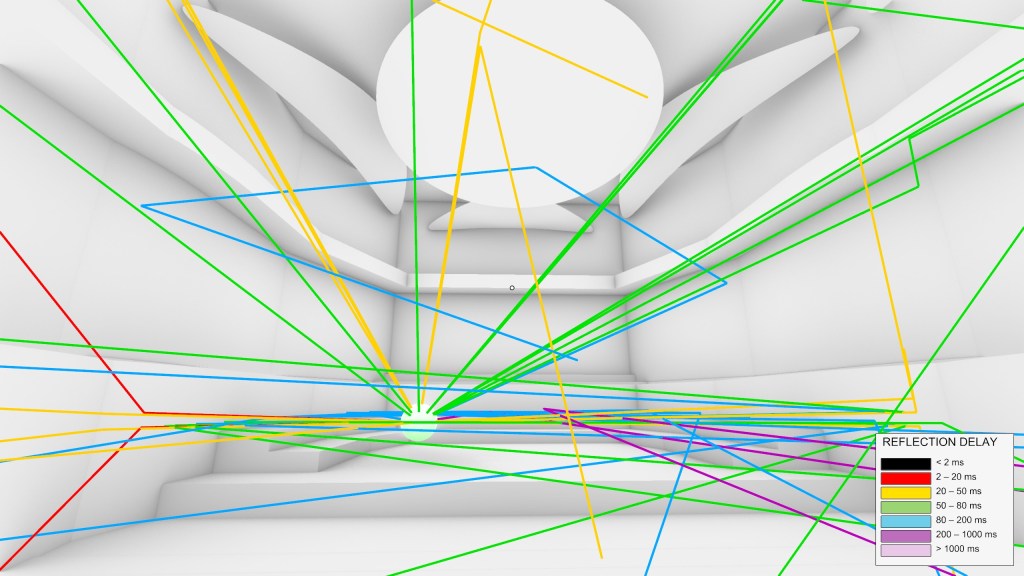
15 years down the track, things have evolve and renderers have improved. Acousticians have no more excuses for not making the effort. It is right there at our finger tips:

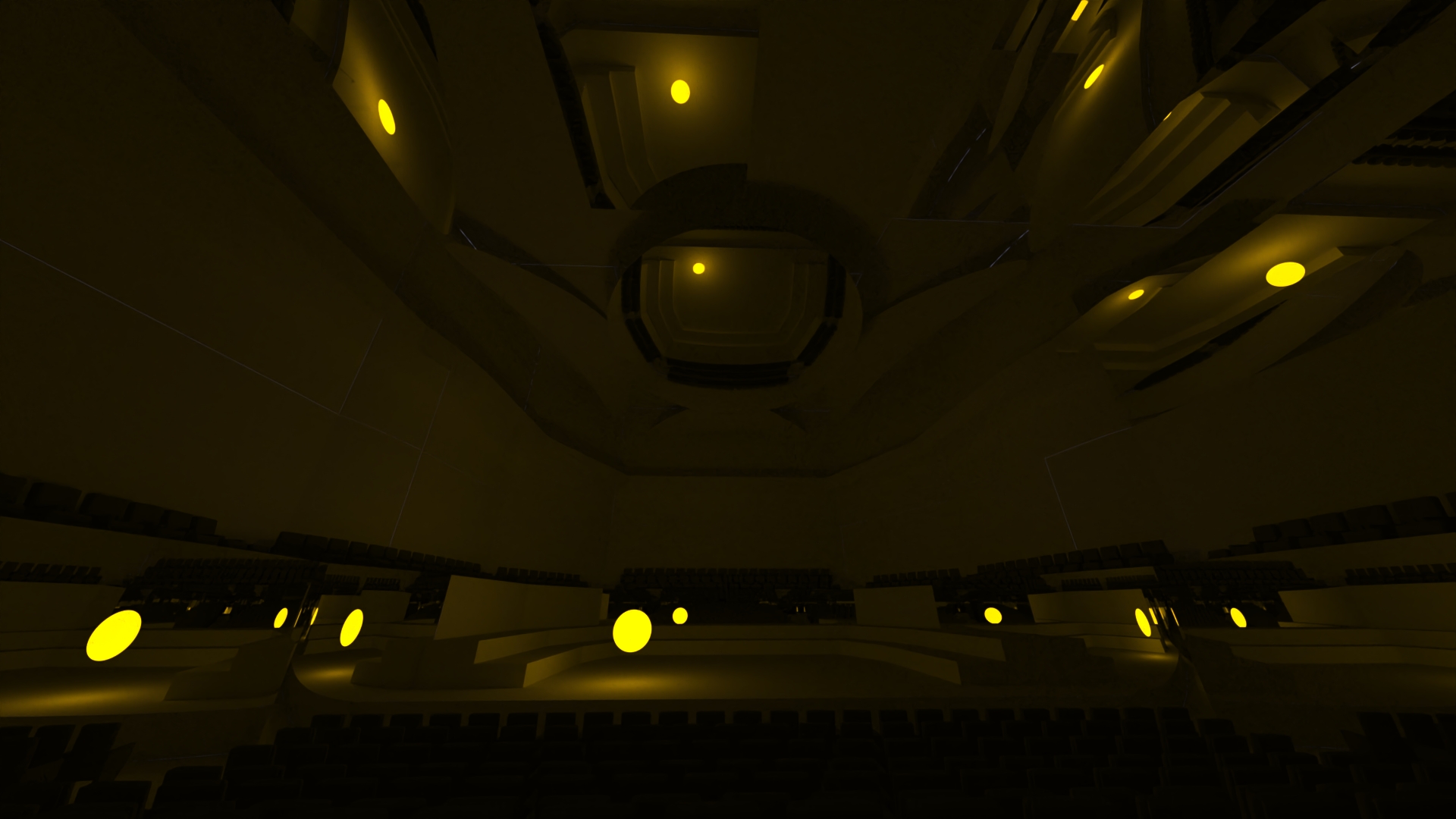
Visualization of sound reflections from an overhead reflections

More on this can be read here:
https://acousticsrd.com/2022/10/16/new-paper-ica2022-machine-learning-experimentation-for-performing-arts/

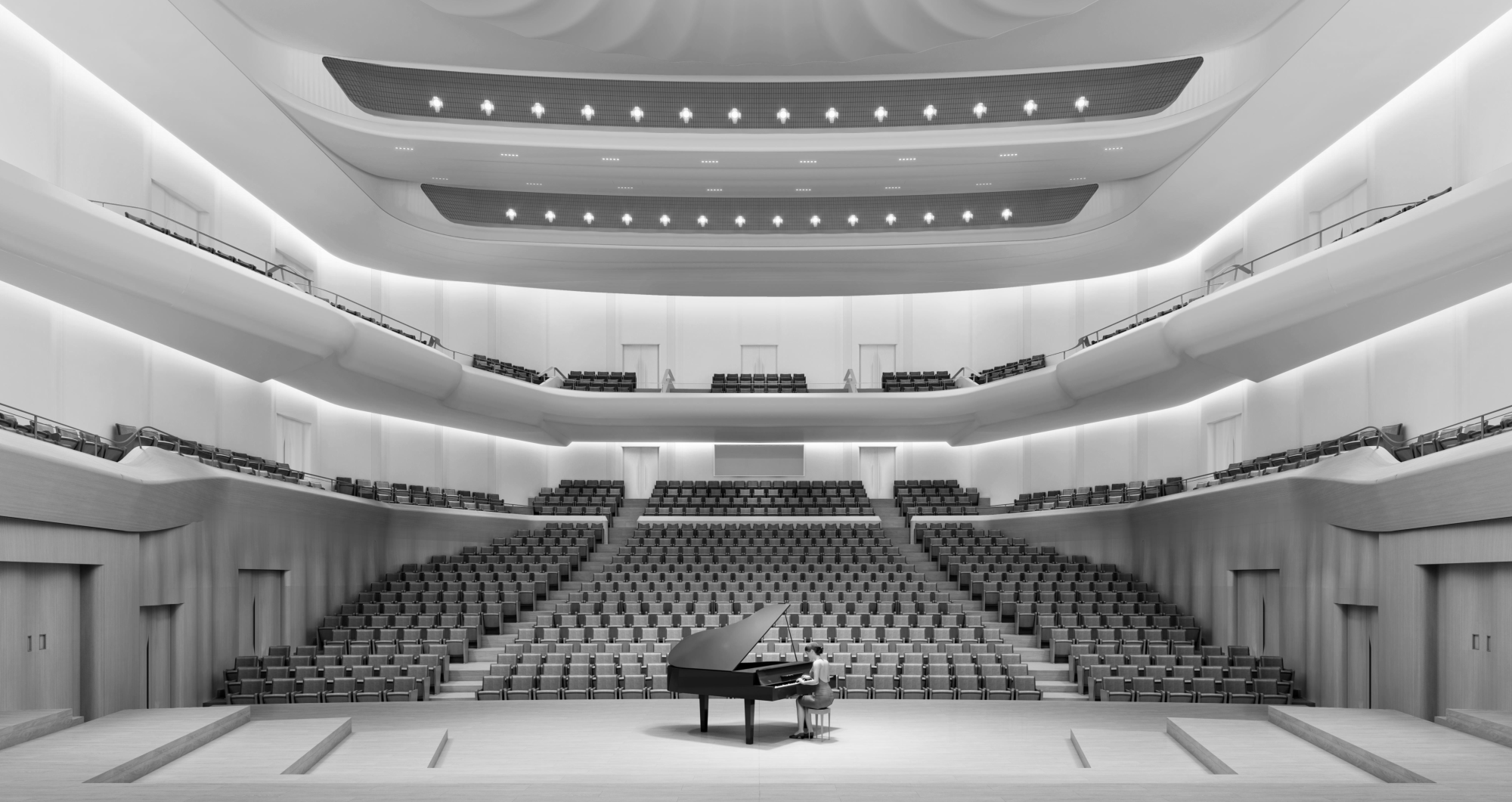
Diffusion pattern on ceilings

These types of ceiling are usually hard to design. We need (proper) randomness, we need to control the dimensions of the individual elements, their angles and depths. All this based on the expected reflections path, delays, strength and coverage. Quickly this becomes a multidimensional exercise that is difficult to describe to an architect. So I took a shortcut through parametric.

In the past, many acousticians have resolved to giving their architect a 2D cross section, and a photo, living her to decipher what this means in 3D, at scale for humans. Then comes the wait for a new design, hoping the acoustic requirements were well understood and followed. And it goes back and forth for a while until one says “close enough”.

At least now I can quickly generate an example, send a screenshot, get feedback (and if needed move on to the next idea) promptly. The bonus part is that I have already setup the acoustic requirements, so I know it works.

Here it is in real-time

A beautiful advantage, is that these elements can be catalogued, quantities detailed, possibly costed and optimised, bringing the design closer to a builtable reality.

Acousticians, how do you calculate room volumes?

Acousticians give a lot of meaning to the acoustic volume of a space. Too large and the room can be too reverberant, not loud enough and the early reflections are inaudible. Too small and the room cannot develop enough reverberation and uncomfortably loud.

Get it wrong and the space will have a lifelong handicap. It is not easy to reduce volume, nor is it cheap to increase it later on. So checking the acoustic volume is one of the critical tasks one repeats throughout the design process.

Hand calculations on 2D drawings is the basics. But now days, I receive a 3D model of the hall before I get scaled 2D drawings. Thankfully 3D models have made this easier, but not necessarily faster. Closing a volume air-tight when its complex and inconsistently built is only for the patient amongst us.

So I’ve decided to automate the volume estimation from the 3D model, in Rhino, using some basic Grasshopper tricks. This seems to work fairly well. The accuracy is in par with other approaches and satisfies room acoustics requirements. But the true benefit is that it takes less than a minute and does not require any model manipulation. It can also be made more accurate by drawings sections at 250mm centers for example instead of every meter.

Acousticians, how do you calculate your complex volumes?

And you, how to you calculate your volumes?

World Theatre Day

Since the early 1960s, the World Theatre Day is internationally celebrated on the 27 March. On this occasion, I want to express gratitude to all the crews, staff, production, artists, roadies, cleaner, ushers and anyone involved in making the show go on.

Celebrating small and big stages for the last 20 years, here is a snapshot of my contribution to the performing arts across 4 different consultancy firms and 31 different drama theatres, 8 opera houses and 22 recital and concert halls.

Here looking for another 20 years…

… also wondering when is World Orchestra Day?