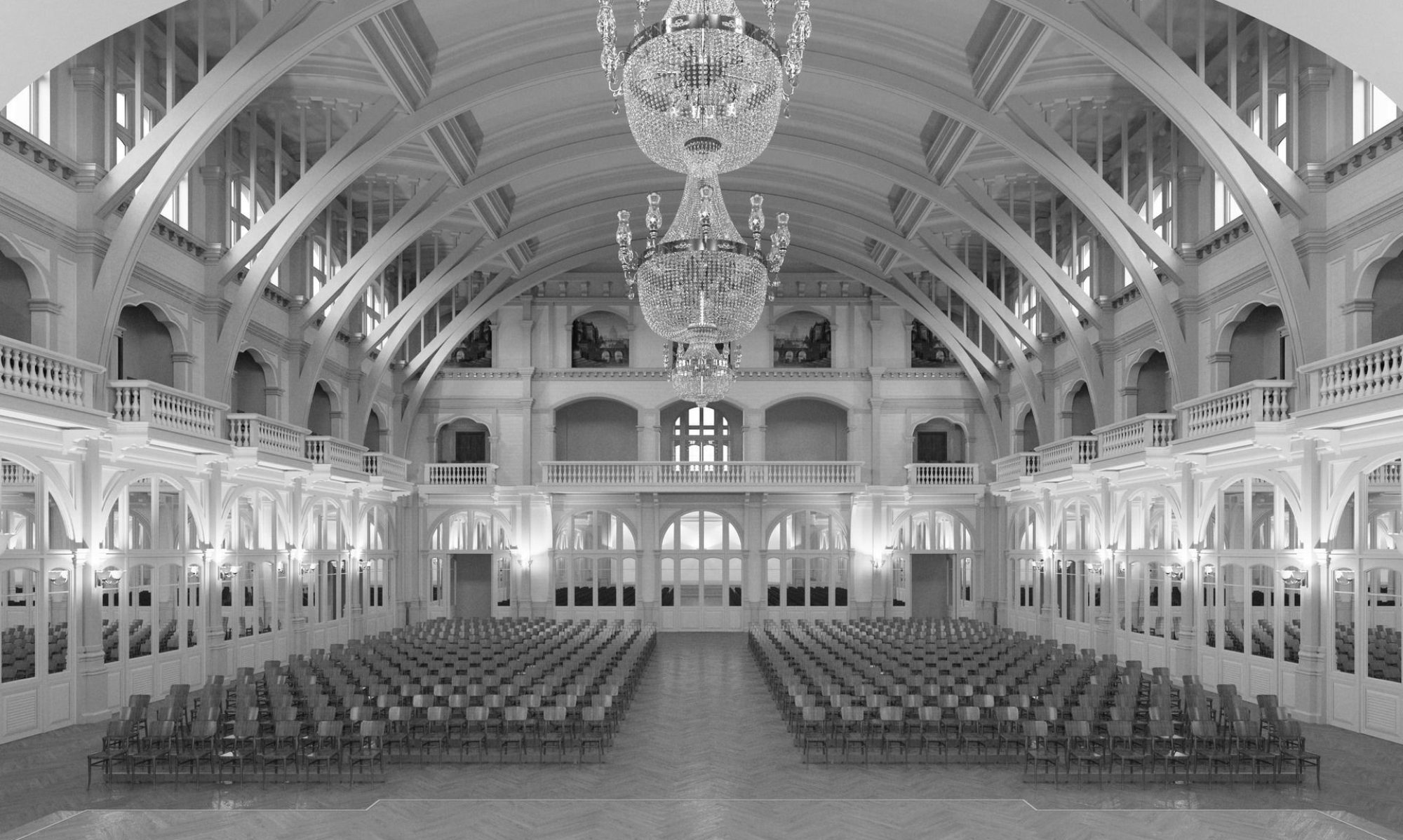
Following up on the popular topic of visualizing sound reflections (see previous post), we want to highlight the benefit of developing systematic tools to illustrates, qualitatively, the acoustical merits of a design (or a design change).

Designs that do not support all orchestral sections sufficiently often result in an imbalance of the orchestral sound or noticeable variations depending on where the performer stands. Indeed, most simulation packages start with the source definition in a 3-dimensional space from which all calculations start, after all, the hall is an extension of the musical instrument.
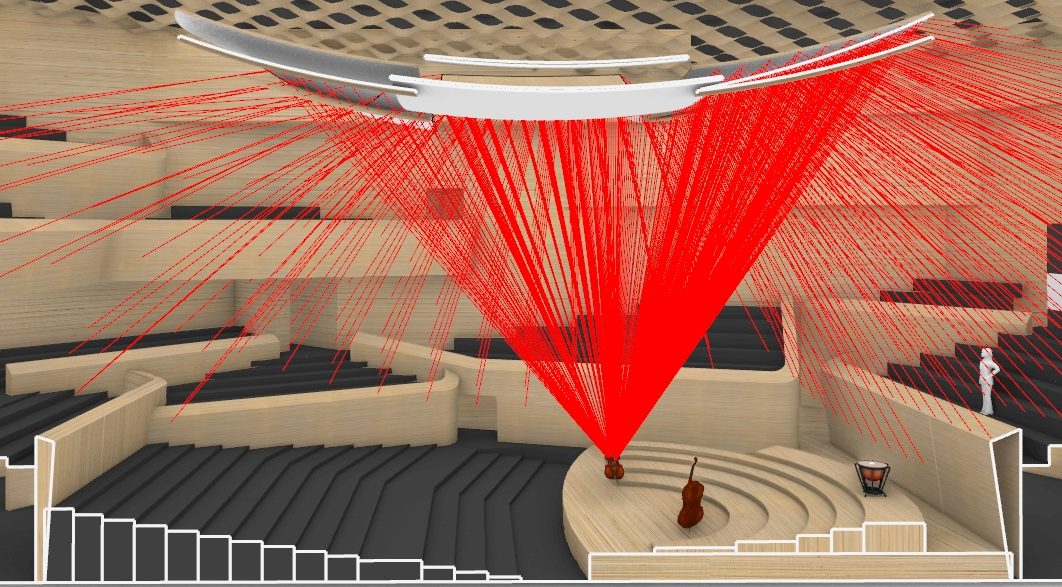
We suggest here that the opposite must also be achieved. The whole stage imaging requires the analysis to be carried out from the listener’s point of view as well. It is not always enough to design assuming one source position at the time, especially the design relies on carefully developed reflection sequences.
Considering the orchestral balance, as heard by the audience, is a respectable goal and many would agree with this but few report or quantify it. It is assumed to be part of the design elements left to “experience” and “know-how”. Acoustic briefs could include requirements such as “The acoustic design of the hall should demonstrate provisions for all areas of the stage and sections in the orchestra”. One of the reasons might be that it is highly related to the artistic direction of the orchestra, the aspirations for the venues and preferences of a conductor, of the moment. Another reason is simply that there is no simple way to check it.
Until this:
And yet, there is more to come!
Talk soon!
 Acoustic Research & Design Ltd