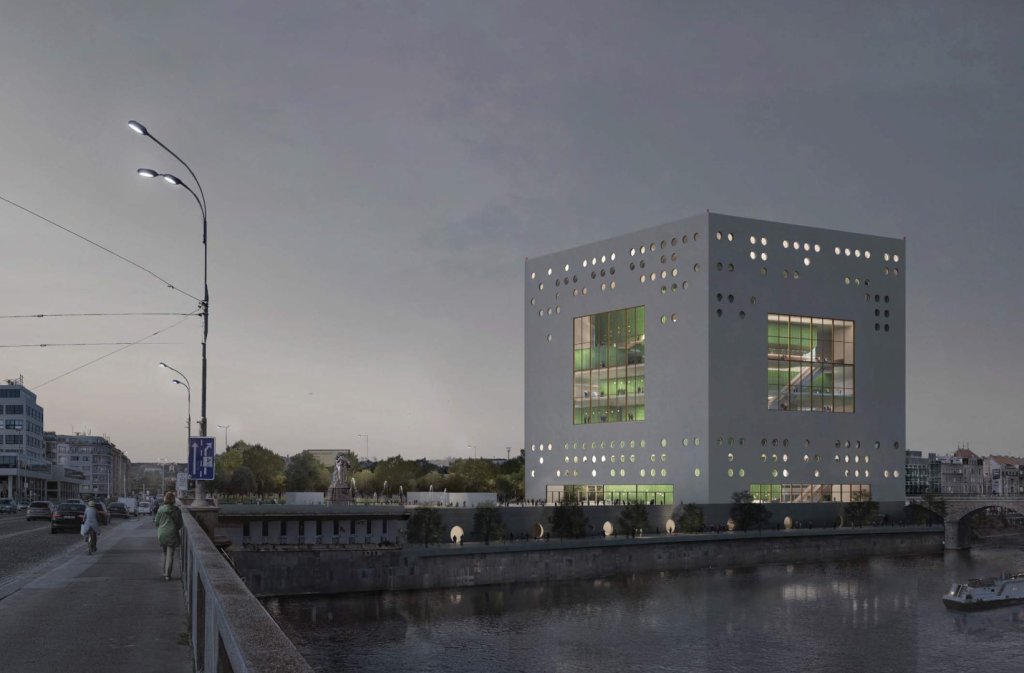
ARD is excited to join Kling Consult, BWKI GmbH, t2o Engineers and ADDIS MEBRATU Consulting Architects and Engineers for the design and construction of the 2nd largest theatre in Africa: the Ethiopian National Theatre Project.
One of the few projects for which I had acoustic design responsibility before leaving Hong Kong has finally opened. It is nice to see the results and an architecture team proud of the project. Well done to my ex-colleagues there for seeing it through.
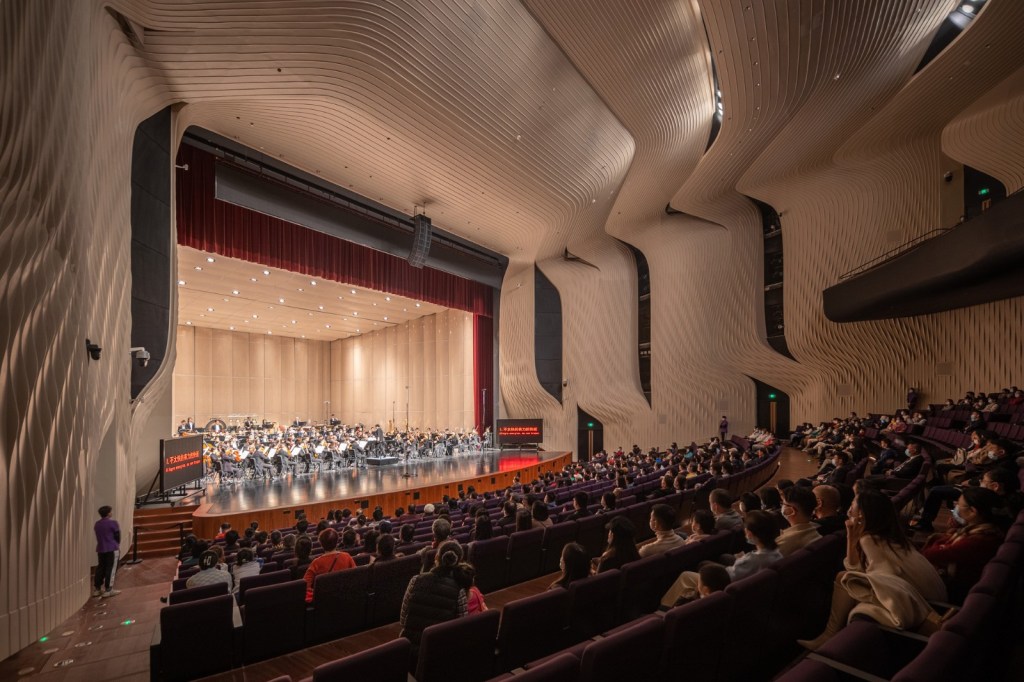
The Shenzhen Baoan Cultural District Performing Arts Center is a 28,000m2 facility by the water, part of a larger complex including a museum and library.
It includes a 1500-seat opera house and a 600-seat multipurpose hall. The main hall is quite functional and designed to accommodate opera and ballet but also a wide range of contemporary Chinese performances. The diffusion on the wall is fully integrated into the architectural finish.
(c) Zhang Chao Studio(c) Zhang Chao Studio
The multipurpose hall is a blackbox with an architectural presence. Able to go flat floor for banquets and tiered on both sides of a fashion catwalk. Its ceiling is technical, the upper white walls project sound for concert and speech events, the lower walls and rear wall are absorptive to accommodate a flexible sound system configurations.
(c) Zhang Chao Studio
Now it is in the hands of artists and I wish them all the best in turning these two venues into a creative and successful new house in Shenzhen.
The latest version of Odeon has, hidden deep inside the material editor, a calculator that estimates the absorption coefficient of acoustic finishes. This quite neat and pretty well put together.
There are few graphic scale issues but overall it looks useful, in agreement with test data (for the 2 cases I’ve played with) and is quite handy (save and use).
Odeon 17 – Material Calculator
Section 4.5 of the new edition of the Odeon Manual gives a decent amount of details.
I started working on this project in 2015 when in Hong Kong. The ground breaking ceremony happened shortly after I left.
The HKUST-SHAW Auditorium, designed by Henning Larsen Architects, opened this week with the HKPhil orchestra.
From what I have heard (second hand due to Covid travel restrictions) the “acoustics are terrific”.
HKUST-SHAW Auditorium (photo by Vera K.)
With a 840-seats, this hall was designed for orchestral music. The acoustic volume makes it perfectly suited to chamber, early and moderate sized symphony orchestras.
The acoustic idea was to propose a concert hall with less diffusion than what is seen in many contemporary halls. One can easily overdo diffusion out of precaution. But this over-engineering converts too much early energy into reverberant sound.
The approach taken balances carefully the early energy (clarity, orchestra presence) with the late (room presence and reverberation). The result is a clear sound, with a good sense of attack, good localisation and enough reverberation for the stop chords.
To make this happen, a thorough 3D investigation was needed, making sure that the apparently rectangular, vertical and concave smooth walls are in fact none of the above to eliminate flutters and focuses. Grasshopper was, as often, my preferred tool to accomplish this task.
The whole team, including my ex-colleagues at MDA Hong Kong, should be proud of the outcome.
Ok, bouncing front waves in an ellipsoid (see part 1 here) was fun but few people will ever need this.
Here is a new example where things become more practical. A top view of what happens with convex surfaces on the sides of the orchestra stage and sides of the stalls.
Things get interesting, especially if the curvatures are parametric. Then we can adjust and see what happens in the “time domain”. Linking this to the audience plans, delays and distance travelled, we start getting a real time ray-tracing that explains the room in both time and spatial domains.
We’ll continue working on that. There is a frequency dimension that might be interesting to play with (yes, this is more than bouncing balls in a surface).
Here is a feature of the room acoustic software ODEON that I have always wanted to use natively in Rhino3D. It is such an efficient way to follow reflections, identify focusing effects of concave surfaces and detect flutters.
Although ODEON adds colors to each reflection matching its order, it does not provide means to reshape the geometry in real time and optimise the effects for great acoustics. Working directly in Rhino3D and being able to reshape the geometry makes this useful visualisation trick a design tool.
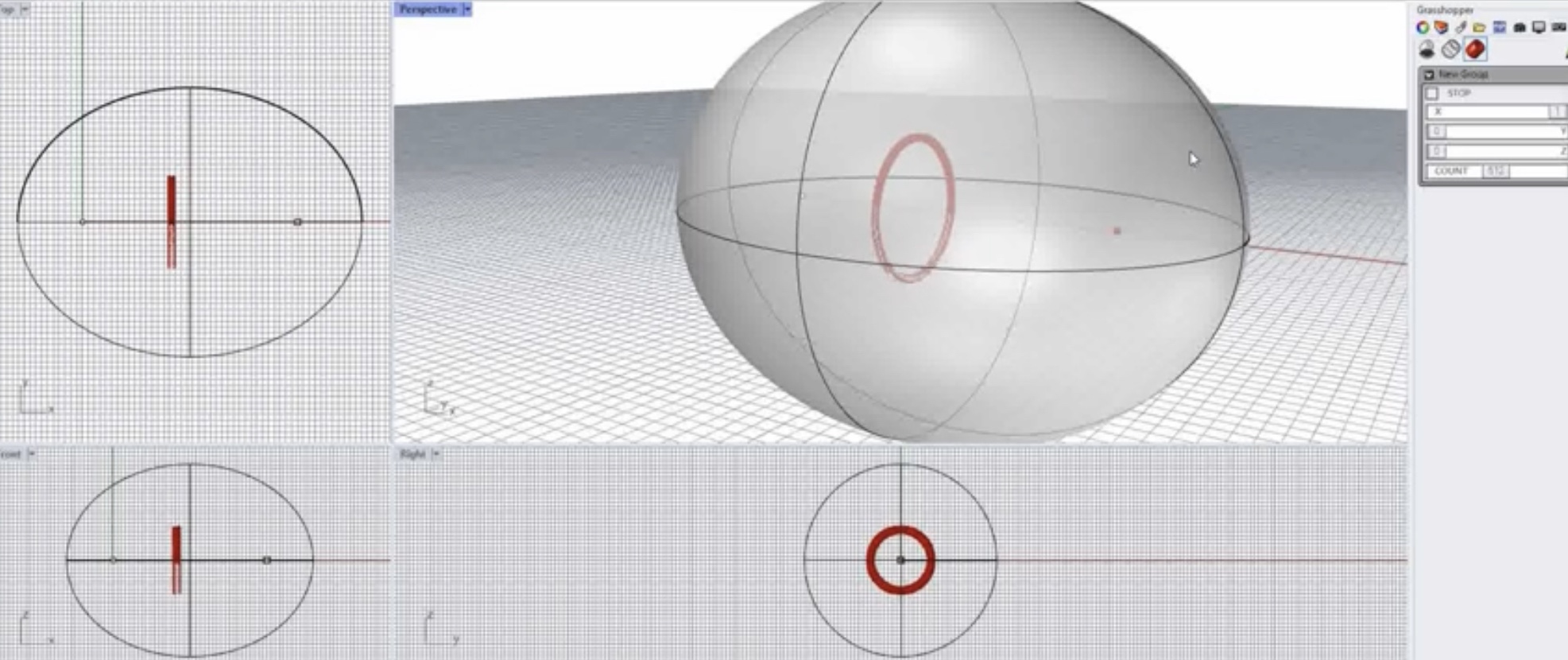
Talking about focus, what happened to the sound emitted at one of the foci of an ellispoid?
The answer is of course that it focuses to the other focus! (That is right, one focus, two foci)
Ice-hockey is a loud game! I am not just talking about the skates on the ice and the impacts, I am also referring to the fans.
Many historical and regional ice-hockey arenas in Scandinavia have low ceilings, steep audience tiers and almost no sound absorptive treatment. They are full, loud and intense places. The speech intelligibility is low, but no one bothers because the atmosphere is electrifying.
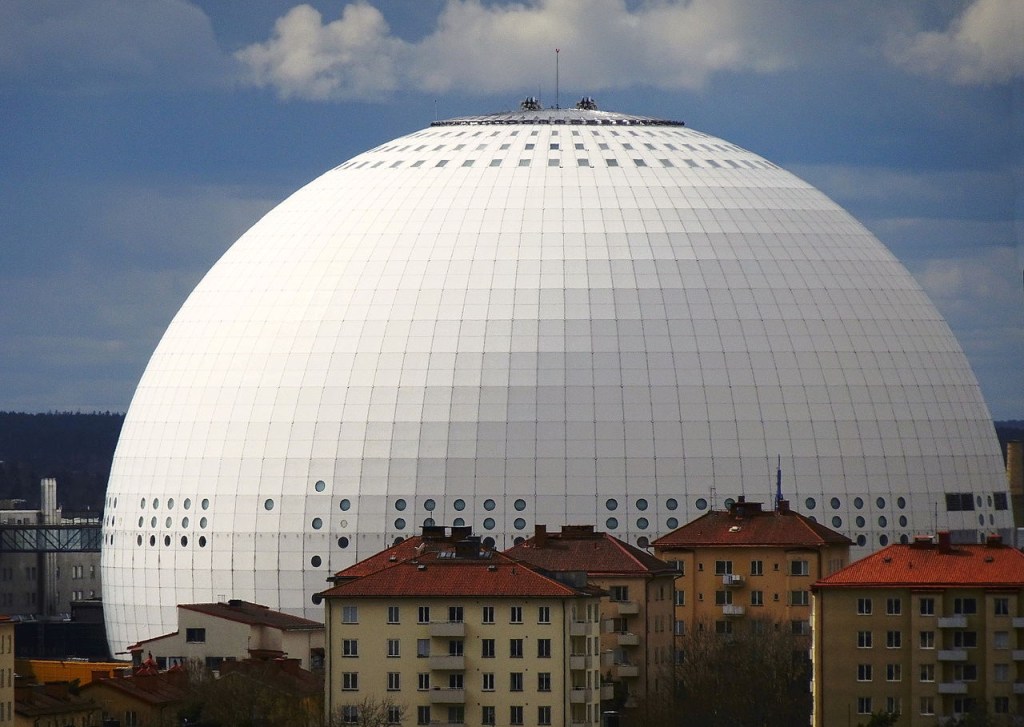
One stands out of the pack and it is the extraordinary Globen in Stockholm. It has a ceiling height of 80m above the ice, a large exposed dome towering above a 13,000-seat capacity, much of it on low rake retractable seating.
With 80m ceiling height, it takes sound reflections nearly half a second to come back!
The volume is so great that no crowd of fans can truly excite the place. Energetic chants dissipate quickly in such volume. Sound reflections take half a second to come back and then only their low frequency components are audible.
It sounds dull and unresponsive. It is really hard work to cheer for your team, let alone hear what they are doing.
A feature in Stockholm’s skyline
Luckily, ARD has investigated and spent a good deal of time over the last months developing with world-class partners a solution to bring excitement to both Stockholm teams and their fans.
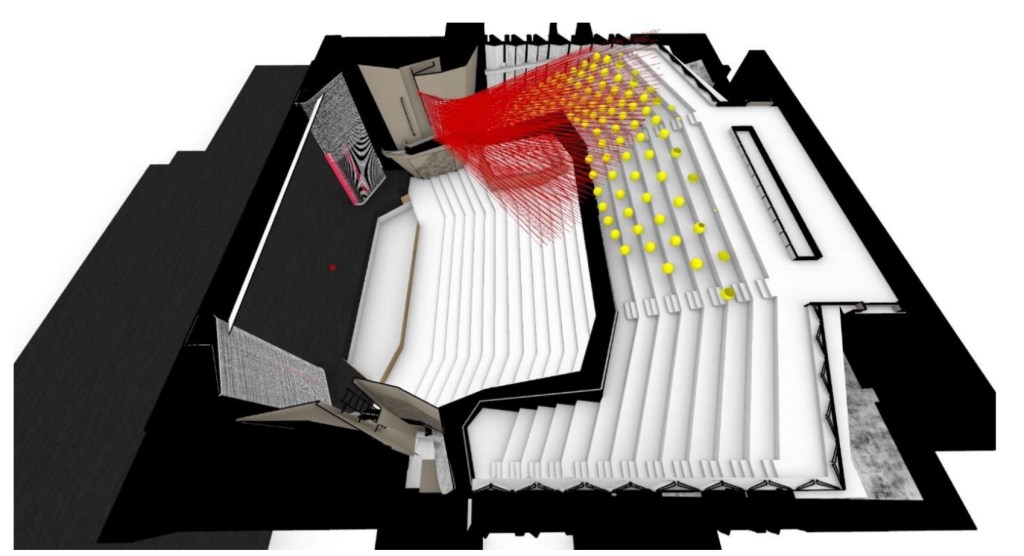
Today we are finally reviewing the interior design for a 1200-seat grand theatre. We always start with a review of the current geometry performance. Understanding how the room works and the potential for each surface and architectural element is critical to us.
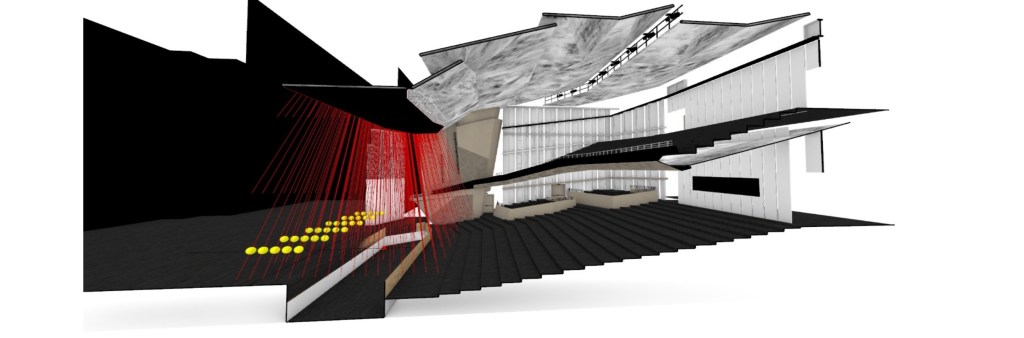
We always start with one of the most critical zone, close to the sources. In today’s case, the sources are on stage and in the orchestra pit.
We make sure that the surfaces promote good communication between pit and stage. This is not only relevant for western opera. In XIQU performances, the lead musician in the pit and performers on stage are in constant visual and aural communication, giving each other cues for rhythms and phrases.
Source in pit, reflection path to the stage
These surfaces are not necessarily dedicated to this reflection path, they also are designed to project overhead reflections for the audience in the stalls. Although such reflections do not assist with envelopment, they boost clarity, speech intelligibility and early loudness. They promote the “Presence” of the performer, highlight the precision of the work and the attack.
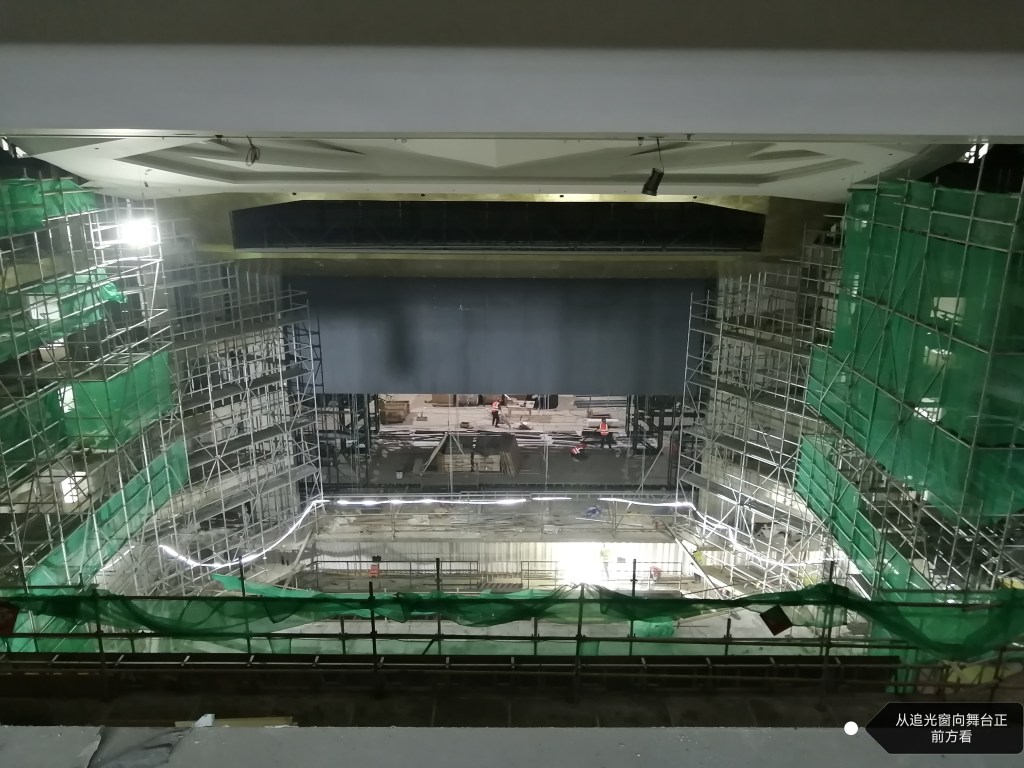
The design and construction of the 1200-seat multipurpose Grand Theatre in Hanzhong is going at full speed!
We are proud of being part of the team, responsible for the room acoustic design. But maybe what makes this project unique is that the main auditorium will be naturally ventilated.
That is right! Four large shafts will link directly the grand theatre to the outside. The average temperature and humidity in the city was found ideal for such development.
A unique feature that will actually meet the needs for energy saving, sustainability objectives as well as COVID-19 most stringent recommendation: 100% fresh air 100% of the time!